Wildlife & Forest Management, Restoration & Implementation Technician
Jun. 2022 - Present
Newleaf Environmental LLC - Danby, NY
I've been assisting in Landscape Restoration & Management with Lance Ebel at Newleaf Environmental - assisting in the implementation phase of one of his management plans. His approach as an NRCS Technical Service Provider and environmental consultant uses grants to make restoration efforts accessible to private landowners, public municipalities, and anyone who needs help managing natural resources - leveraging funding to pay for management activities that would otherwise be difficult to justify financially, including pre-commercial forest thinning & wildlife habitat planting. In the case of municipalities, consultation services are available for urban forestry, wildlife & forestry management, planning, and project development, oversight and implementation.
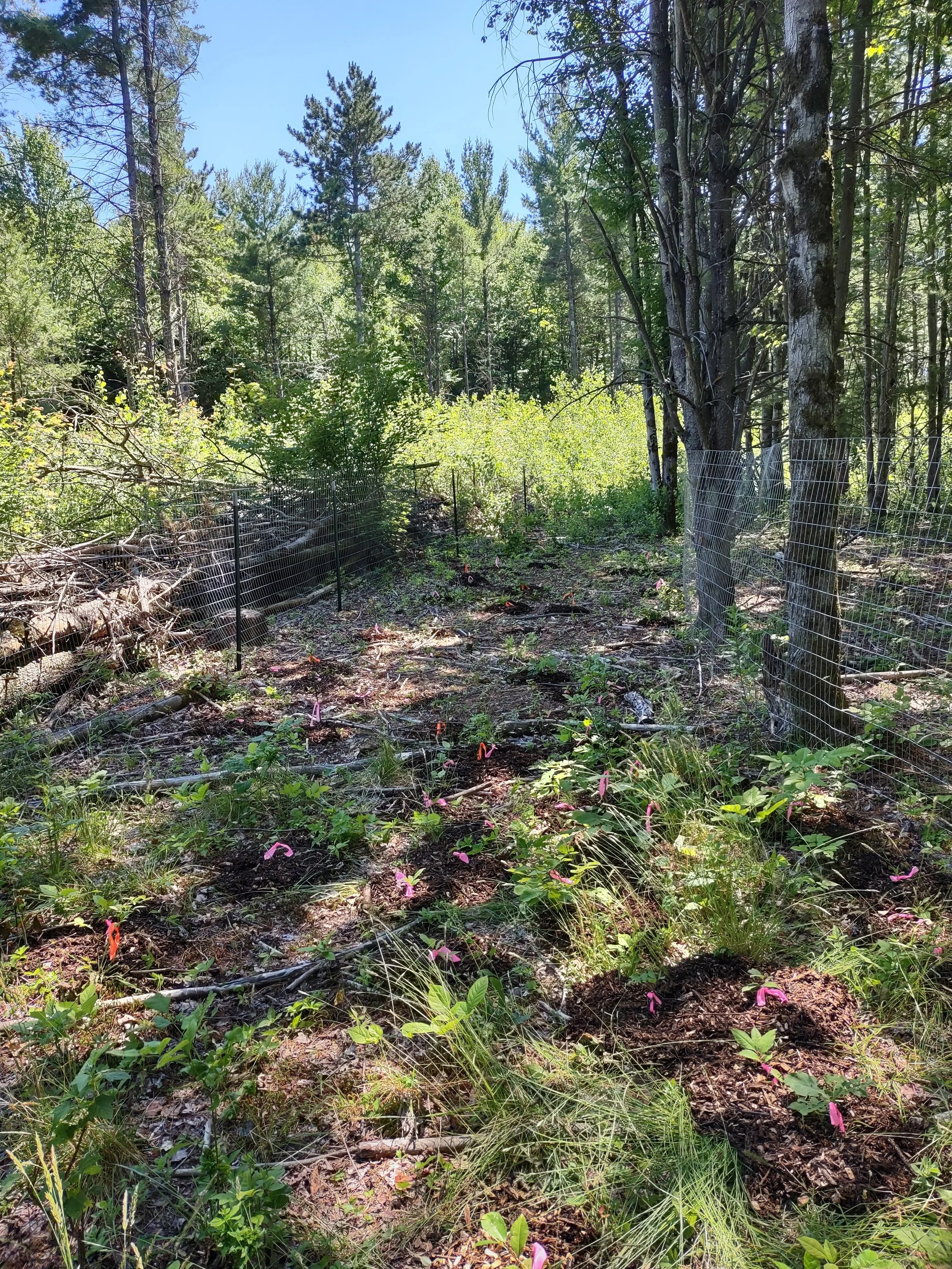
I’m eternally grateful for the chance to have my workday be tending early successional plantings - hanging out in the woods, practicing my plant ID & mulching baby trees at this stage of the implementation. Walking the landscape that’s recovering from historical heavy use as cattle pasture, then left fallow to turn into thick red maple stands. The grant this management plan is funded through is a combination of forestry and wildlife management. After releasing pressure from the red maple, native plantings were selected to support succession resiliency, rebuilding soil, and wildlife habitat.
“The Wildlife Habitat Management Plan, or CAP 142, is a comprehensive plan that takes into account the landowners wildlife goals, includes a general inventory or plants and animals on the property, and articulates how to reach management goals through practice implementation. Some practices include clearing, removing invasive plants, planting native mast producing shrubs and trees, and building trails to facilitate management activities. ”

Planned Conservation Practices (2017 management plan)
“In general, the light green area is planned to be early successional habitat, with the dark green becoming a feathered edge, or transitional habitat, between the open and forested habitats. Stand 8 will be more forested than the light green area, to add diversity to the habitat. Nest boxes for screech owls, kestrels, blue birds and swallows will be spaced appropriately throughout the area after clearing is complete. Herbaceous, shrub and tree species that specifically benefit wildlife with food and cover will be planted in cleared areas. Debris will be piled into wildlife brush piles. Snags will be created by girdling, or if already existing, will be left. Especially those with shaggy bark, providing roosting sites for bats. Mast producing tree species will be targeted in the light blue area. These will mainly be oaks, hickories, serviceberry, cherry, beech and pines.”
— Newleaf Environmental LLC
-
314 - Brush Management, Hand Tools, Woody Vegetation-1 acres
647 - Early Successional Habitat Development, Mowing-6 acres
647 - Early Successional Habitat Development, Shelterwood Cut-12 acres
382 - Fence, 8 foot netted Wildlife Exclusion Fence, Wooded-1000 feet
666 - Forest Stand Improvement, Wildlife Crop Tree Release-2 acres
612 - Tree/Shrub Establishment, Tree/Shrub Planted Area with Protection-6 acres
490 - Tree/Shrub Site Preparation, Mechanical Light-6 acres
484 - Mulching, Wood Chips-1,100 sqft
649 - Structures For Wildlife, Brush Pile Small-30
649 - Structures For Wildlife, Nest Box Large-1
649 - Structures For Wildlife, Nest Box Small with wood pole-20
384 - Woody Residue Treatment, Light-12 acres
660 - Tree/Shrub Pruning, Wildlife-2 acres
612 - Tree and Shrub Establishment-Individual tree hand plant with tubes 1800 units 3 acres
-
Gray Dogwood
Elderberry
American Hazelnut
Serviceberry
Blueberry (Highbush & Lowbush)
Oak (White & Red)
Pine (White)
Black Cherry
Red Raspberry
Arrowwood
Autumn Olive
Black Walnut
Ash
Multi-flora Rose
Deadnettle
Hawkweed
Jewelweed
Stinging Nettle
Queen Anne’s Lace
Plantain
Mullein
Feverfew
Flea’s Bane
Lamb’s Quarter
Apple Mint